She quit consulting to Sell Falafel. How Noor Built Nabati, Rotterdam’s Jordanian Restaurant
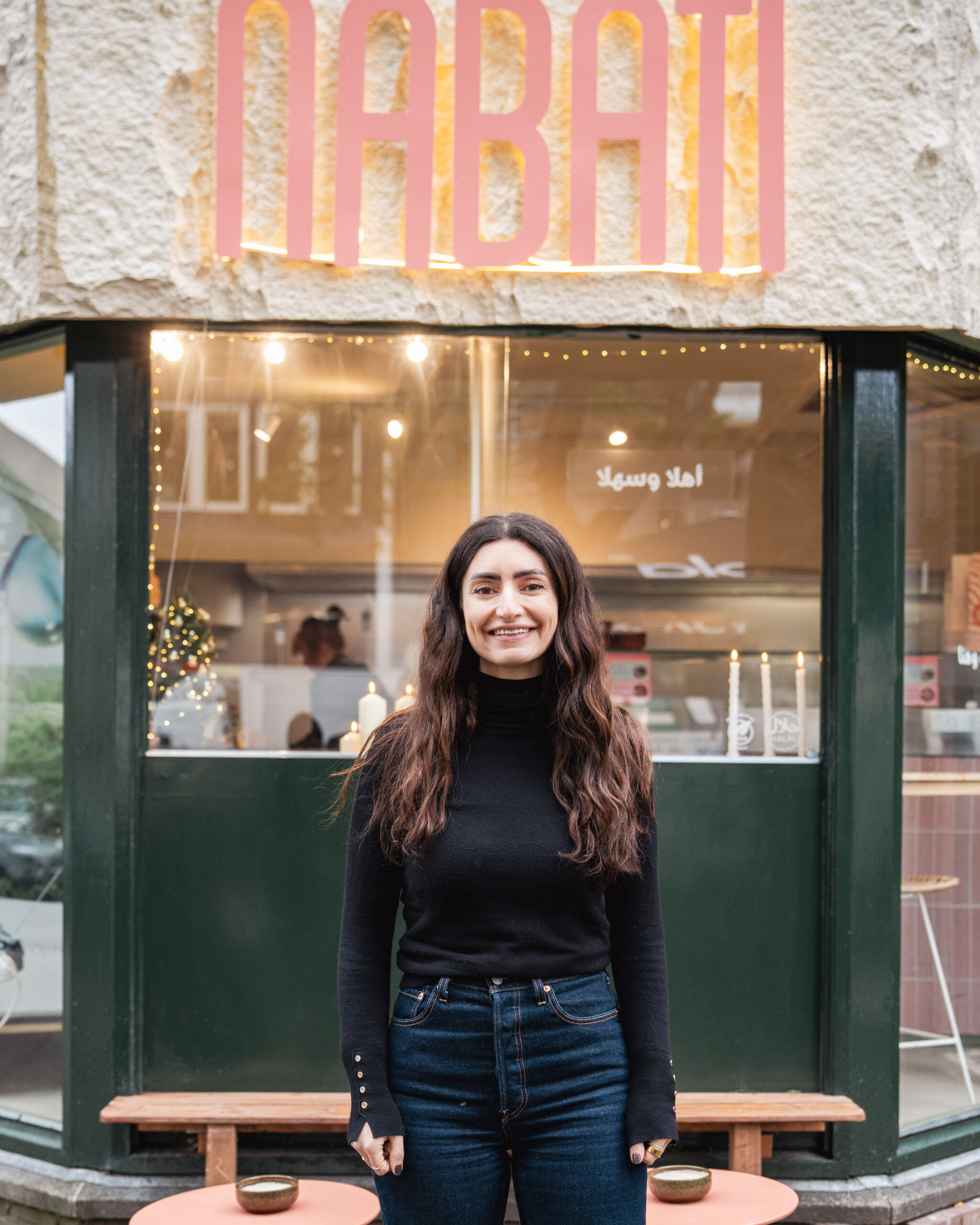
At 2 a.m. in a Doha office, still at her desk, Noor asked herself a question she could no longer ignore: why am I doing this? The answer, when it came, took her somewhere she genuinely could not have predicted. One year later, she was behind the counter of a Jordanian food restaurant in Rotterdam, watching strangers eat food from her hometown and love it.
The career that taught her everything except fulfilment
Noor grew up in Fuheis, a quiet town just west of Amman known for its stone houses and slower pace. She built a consulting career that took her across Jordan, the UAE, Saudi, Qatar. She worked both with large multinationals, government, and independently. Her career shows that she was great at her job. Consulting taught her how to manage complexity, keep many moving parts on track, and deliver under pressure. She names those skills directly, and means it.
But good at something and rewarded by it are different things. By 2023, she had started freelancing to reclaim her time and choose projects that felt more aligned. Then came Qatar. A project that required 16 to 18 hours a day, weeks on end, leaving the office in the middle of the night. “It literally sucked the soul out of me,” she says. During a trip back to Jordan, she sat down with her brother Nawras over coffee. The conversation that followed changed the direction of everything.
Roots, recipes, and a gap in Rotterdam
Nawras had lived in Rotterdam for over five years and had been watching the city’s food scene closely. Arab food existed there, loosely grouped under “Middle Eastern” or “Mediterranean” labels. What was missing was something specific: the food they actually grew up eating. Levantine food. The real thing, made properly.
The idea for Nabati took shape fast. The name carries several layers: plant-based food in Arabic, a nod to sprouting from roots, and a reference to the Nabataeans, the ancient civilisation that built Petra. The menu draws directly from memory. A falafel shop in Fuheis called Abu Jordan became a direct source, with the owner sharing original recipes via voice notes. Their chef, Samer, an old family friend, who is a Palestinian Syrian is also quite familiar with being a newcomer. Samer was displaced multiple times to finally end up in the Netherlands, for the past 10 years. He worked multiple jobs but always found passion in cooking. So when Noor reached out he adapted those recipes for the Dutch market, adjusting for available ingredients without losing the original character.
Noor wrapped the Qatar project, applied for her visa, set up the company, and relocated to the Netherlands in February 2025. The whole sequence took three to four months. “It was honestly such a quick decision,” she says. She pauses, then adds: “One year later, look at me. I’m much happier.”
The daily reality of building from scratch
Noor arrived in Rotterdam with ambition, transferable skills, and almost no hospitality experience. She says this plainly. She and her co-founders, Omar and Osama alongside Nawras, chose a menu built around items with longer shelf life partly because it made the business more manageable for first-time operators. The first months were still chaotic: equipment issues, supplier problems, the daily unpredictability of running a physical place. She describes it as stressful in a way that felt entirely different from consulting stress. “It’s so tangible,” she says. “People actually really enjoy the food, and I love it.”
Supplier sourcing proved one of the hardest early hurdles. Nabati needs ingredients outside the standard Dutch supply chain. Noor found her way in through Arabic Facebook groups and direct outreach, building a network piece by piece. The team numbers five people rotating shifts, with regular customers already known by name and orders prepared in advance.
Behind Nabati’s counter is a small team that works. Jan is Belgian, moved from the Canary Islands, and was on shift the following week. He is the one who spots the inefficiency nobody else has noticed yet, finds something to reuse, and quietly fixes it. Ilse is a Dutch advertising student who makes every customer feel at ease and, somewhere along the way, becomes seriously good at making hummus. Amin, an Iranian advertising student, grew up with the flavours Nabati is built around and has a natural eye for how food should look on a plate. His plating makes every dish worth a second glance.
Restaurants are only as strong as their neighborhood, so she set up a neighbour discount to bring the surrounding community in. She hopes to also organize small events to further engage with her visitors.
Food as something more than food
Noor is direct about what Nabati is trying to do beyond serving food. Arab food, she believes, has been flattened and misrepresented in Europe for a long time. “We think our food needs to be better presented and better accessible,” she says. “We need to reclaim this food.” Nabati avoids mainstream boycott-targeted drinks, because it reflects the team’s values and, as Noor puts it, “starts a conversation.”
That conviction runs through every part of how the restaurant was built: the name, the recipes, the staff culture, the ambition to move toward an employee-ownership model as the business grows. Omar Shukri shaped the branding, Lara El Hachem worked on menu design and recipes, and Nadine Najjar handled marketing. All three are close friends or family who gave their time freely to help Nabati get off the ground. The restaurant carries that with it.
What Nabati is becoming
The long-term picture is clear in Noor’s mind. Nabati was designed to scale. A second Rotterdam branch within one to two years. Then a third location to grow into other major Dutch cities such as, Utrecht, The Hague, or Leiden. The framing she uses is direct: Arab food deserves the kind of chain model that other cuisines already have. She knows investors sometimes focus on the four-partner structure and the absence of horeca experience. She answers those questions by telling the full story of how the team works and what they have built. The story speaks itself. .
A few years ago, the idea of running a restaurant in the Netherlands would have sounded, in her own words, “so absurd.” It still surprises her a little. That surprise seems to be part of what keeps it alive.
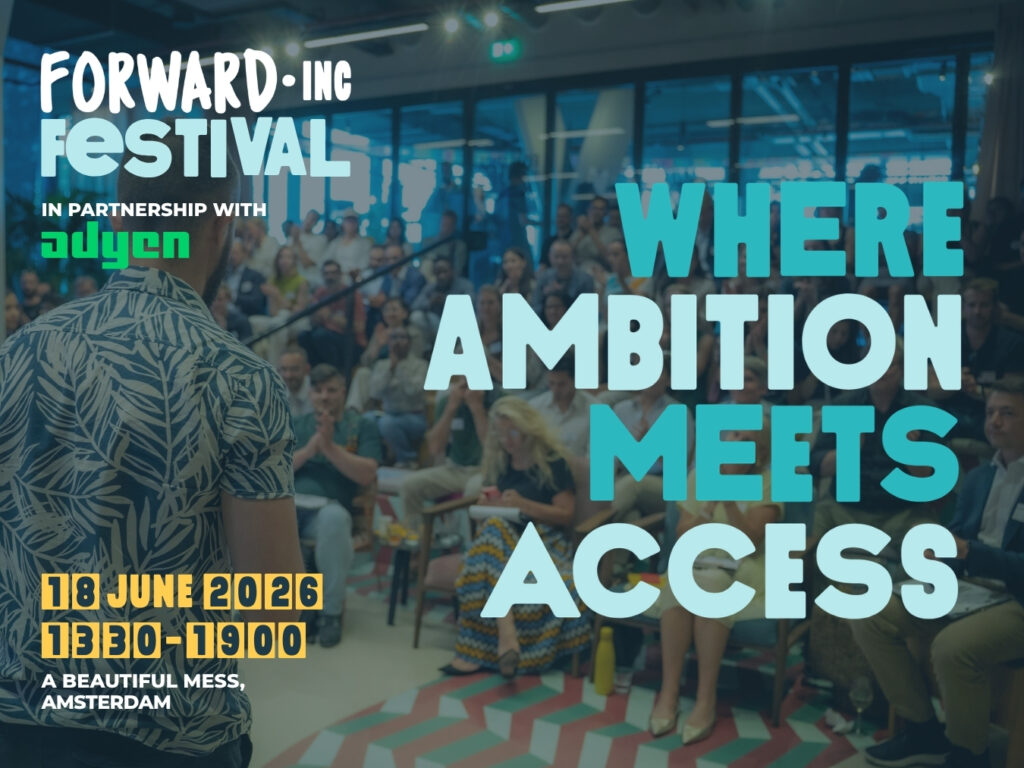
Noor is part of the Forward·Inc community and pitching at Forward Festival this year as part of the Investor Readiness programme. Curious about what Nabati is building? View her investor proposition here.
Learn more about Nabati and their Levantine food concept in Rotterdam at nabatieatery.com or connect with Noor on LinkedIn.
Curious about how Forward·Inc supports newcomer entrepreneurs? Learn more at newcomersforward.com.